Compare the features that change the decision
Start with the setting and the artwork. A quarter-zip gives a team an adjustable collar, a hoodie adds a hood and a casual silhouette, and a crewneck keeps the neckline simple. None of the three names tells you the actual fabric weight, fit or warmth. Compare those details on the selected product.
On smaller screens, scroll the table horizontally to compare all three styles.
| Decision | Quarter-zip | Hoodie | Crewneck |
|---|---|---|---|
| Neckline | Short front zipper and standing collar | Hood; check whether the selected style is pullover or full zip | Round neckline with no hood or front zipper |
| Layering | Adjustable neckline over a tee or collared shirt | Hood adds bulk under another jacket | Simple neckline under a jacket or over a tee |
| Logo placement | Keep chest artwork clear of the zipper | Check the hood, pocket and any zipper against the artwork | Uninterrupted chest on a plain crewneck; verify seams and usable area |
| Fit checks | Neck opening, chest, sleeve and hem | Chest, body length, sleeve and hood fit | Chest, body length, sleeve and neck opening |
| Useful starting point | Office layers, customer-facing teams and offsites | Casual team wear, club merch and clothing drops | Team events, school groups and layering without a hood |
Choose a quarter-zip for a collar and adjustable neckline
A quarter-zip is a useful starting point when the team wants a layer to wear over a tee or collared shirt. Decide how the logo should look with the zipper open and closed. A small chest mark avoids spanning the opening; any large back design still needs a placement check against the selected garment.
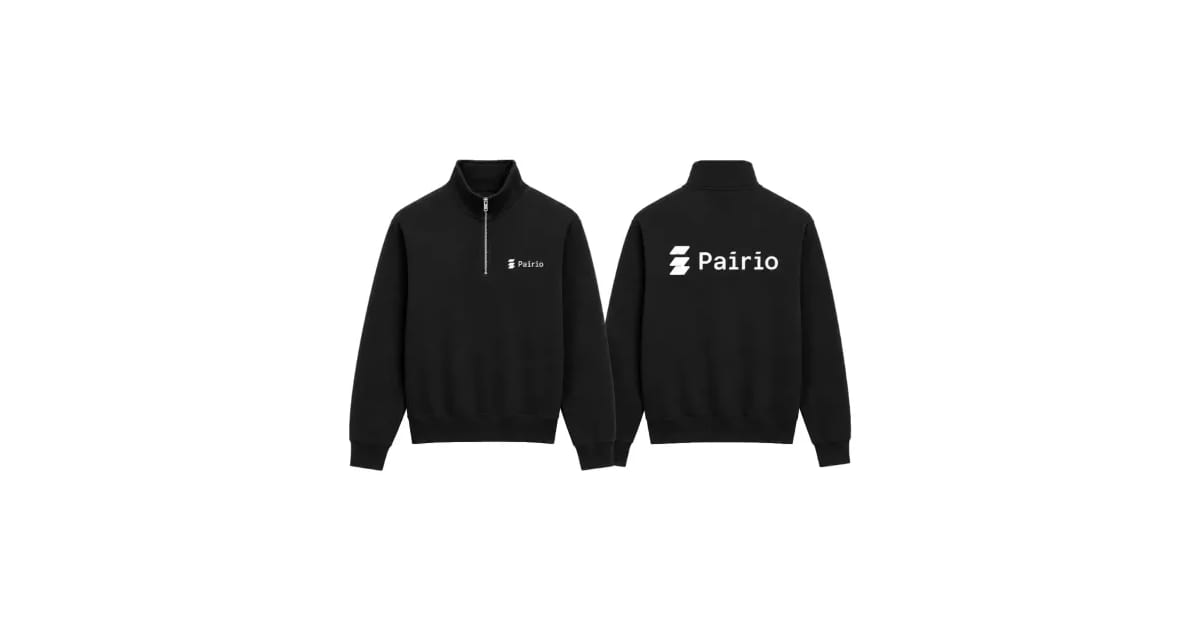
Compare the catalog quarter-zip and the options on custom quarter-zips. The Pairio project shows a small chest wordmark and a larger upper-back logo on black fleece. Use it to discuss scale and placement, not to assume the same blank or method is right for your logo.
Choose a hoodie when the hood is part of the look
For casual team wear or a clothing drop, a hoodie can be the main garment rather than a layer under a jacket. Check the hood's resting position over back artwork. On the front, keep a pullover pocket or full-length zipper out of the intended print area unless the production plan specifically addresses it.
Start with the 380 GSM pullover hoodie or compare custom hoodie options. The Manicule hoodie pairs a small front icon with a larger AI Native DevRel back graphic. The published project is a reference for front-to-back contrast, not proof that every graphic can use the same process.
Choose a crewneck for a simple layer without a hood
A crewneck leaves the back free of a hood and avoids a zipper through the chest. It is a useful option for groups that want one sweatshirt for events and everyday layering. Check the neck opening and body length as well as chest width: removing the hood does not make two different garments fit the same way.
Compare the 380 GSM crewneck with the selection on custom crewnecks. The SteelHacks XIII crewneck uses a small front wordmark and a sunset Pittsburgh skyline graphic on the back. It shows how a school or event identity can extend beyond a single chest logo.
Check the exact blank, size mix and artwork together
- Fabric: compare composition and listed weight. GSM measures fabric mass per area, not a warmth rating or a guarantee of softness.
- Fit: compare published measurements with something recipients already wear. Allow for the layer underneath when checking fit.
- Sizes: confirm the selected style's offered sizes, then collect the team's choices. A letter size can differ between products.
- Decoration: use the product's published specifications, then review the actual logo and placement before choosing printing or embroidery.
Use choosing blank apparel for fabric and fit questions, the size-breakdown guide to reconcile quantities, and print-ready artwork to prepare the files. If the fleece is one piece in a larger kit, count it separately using the welcome kit checklist.
Turn the shortlist into a quote request
Pick a preferred garment and, if useful, one alternative. Send the product references, colors, quantities by size, artwork locations and required arrival date through the decorated merch quote request. State whether the team has chosen a style or still needs help comparing fit. Availability, decoration feasibility and timing are confirmed for the order before production.