1. Choose pieces for the working day
Start with what recipients will use: a tee for everyday wear, a cap for outdoor events, or a tote for carrying a laptop sleeve and daily essentials. A useful kit can have fewer than three items. For an office layer, compare a quarter-zip, hoodie and crewneck before adding fleece to every kit.
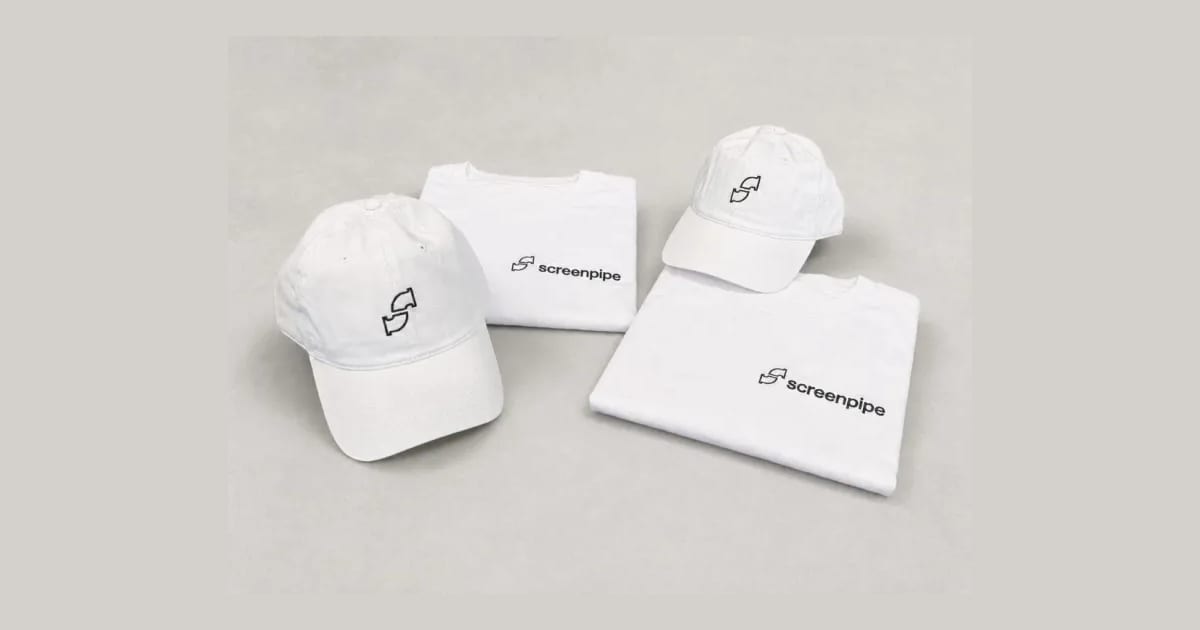
Browse the published selection on employee welcome kits. A starting shortlist is the merch tee, classic 6-panel cap and canvas tote. Check each product's material, dimensions, colors and decoration notes before committing. The screenpipe project shows tees and caps with a consistent visual identity. It does not establish packing or fulfillment arrangements for your order.
2. Count recipients and items separately
A headcount is not the order quantity when each person receives several pieces. For 30 recipients getting one tee, one cap and one tote each, request 30 of each item: 90 pieces in total. This example has no spares and assumes all 30 people receive the same three item types.
| Item | Per person | Order quantity |
|---|---|---|
| Tee | 1 | 30 |
| Cap | 1 | 30 |
| Tote | 1 | 30 |
| Total | 3 | 90 pieces |
Split the tee quantity into actual sizes, then split each item by color and artwork where those differ. If you want spares or a second hiring cohort, list those separately. One combined total does not confirm availability or minimums for each design and color; those details are confirmed on the written quote.
3. Collect sizes against the selected garment
Choose the garment before requesting sizes. Ask each recipient to compare its measurements with a garment they already wear. A preferred letter size alone can miss differences between fitted and relaxed styles. Record the recipient, product, color, size and quantity, and set a deadline for corrections.
Reconcile the size totals to the item count before approval: in the example, all tee sizes must add up to 30. Mark unanswered sizes as unresolved rather than silently assigning medium. The size-breakdown guide explains planning estimates when recipients are unknown; known employees can supply their actual choices.
4. Approve artwork for each item
Supply the original logo file and name one person who can approve proofs. Record the intended logo dimensions, placement and colors for each product. A tee chest, cap front and tote panel have different usable areas, so the same logo may need different sizing or preparation. Use the item's published decoration notes as a starting point and have the final method confirmed for your artwork.
Follow the print-ready artwork checklist for file preparation. Save the approved proof version with the item list so an older logo does not accidentally become the reorder reference.
5. Specify arrival dates and receiving details
State both the new-hire start date and the date the order needs to arrive. Leave your team time to count, sort and distribute the items. Include each destination, a receiving contact and any building or event receiving instructions.
If you need individual kit packing or multiple destinations, describe the request before the quote is finalized. These are requirements to review, not services to assume. Confirm the packing arrangement, delivery plan and feasibility in writing. The production timeline guide explains which approvals and order details must be complete before timing starts.
6. Send one complete brief and keep the record
- Recipient count, item list and quantities, with spares listed separately.
- Product references, colors and a checked size breakdown for each garment.
- Artwork files, placement instructions and the person approving proofs.
- Required arrival date, destinations and any packing requests.
Use the existing welcome kit quote request to start. After approval, keep the written quote, final quantities, product references, proof files and order reference together. For the next hiring cohort, send what should stay the same and what has changed through the reorder request. Saved details help describe the next run; current stock and timing still need confirmation.